Sunday, March 15, 2015

Teaching with Infographics


North vs. South: Success in the Civil War | Create infographics

The point of this infogram was to teach people about the differences between the North and the South and how they affected each region's success in the Civil War. To start mine off I used population, this sets the scene as to how many people there are and what the Country’s total population was at the time. Next I compared each region's industrial assets; as in things like industrial workers, and value of manufactured goods. In this category it seems that the North pretty much dominated. Next I showed the major crops that each region was producing, these were corn and cotton, the North produced more corn, but in cotton production they were completely overshadowed by the South with a ratio of 0: 5,000,000. The next topic was war strategies, in this department the North came out on top as well. The south had a good idea, to pressure other countries into helping, and it would have worked if it hadn’t been for Egypt and India that could instead supply France and Britain with cotton. Finally in my infographic, I discussed the ultimate advantages of both sides. The North has more railroad mileage, factories and the majority of the population lived in the North. The South had more military colleges so this made the more trained military officials side with the confederacy, they also did not have to initiate any military action but only had to defend their front. Overall both sides had advantages and their were many different aspects of each side that gave them an upper hand on the war.

Thursday, March 12, 2015

Unfair and Undiscussed: What Else but Slavery?

The unit that we have been working on in history has been about slavery and the civil war, most recently we have been discussing how slavery has impacted all of the systems in the U.S. The question that we were trying to answer in this section is; How do we know the debate over slavery was the “elephant in the room” for American politics in the early 19th century? The expression “elephant in the room” refers to an obvious truth that is either being ignored or going unaddressed. This applies to slavery because there were certain aspects of different situations involving slavery that people ignored to achieve what they wanted regarding the issue.
Displaying IMG_6116.JPG
My groups timeline.

Displaying IMG_6117.JPG
Clear and concise descriptions of the events shown on our timeline.
To answer this question, in small groups we created a timeline to analyze certain events that gave slavery the controversial reputation that it has. The first largely important event on our timeline is The Compromise of 1850, this was proposed by Henry Clay and it contained 5 parts. The first was that Texas had to relinquish part of its land and then they would be given $10 million this is money that would be used to pay off it's debt to Mexico. This satisfied proslavery advocates. The second part was that the territories of New Mexico, Nevada, Arizona and Utah would be later be determined slavery or a free state by the inhabitants when they applied for statehood. Next the compromise of 1850 stated that the district of Columbia slave trade would be abolished, although slavery would still be permitted. This satisfied anti-slavery advocates. The next part was that California it would be admitted as a free state. This obviously satisfied those that were against slavery. The last part of the compromise of 1850 was the fugitive slave act. This required citizens to assist in the recovery of fugitive slaves; and it also denied a fugitives right to a jury trial. All of these parts to the compromise of 1850 applied to slaves, but the decisions were made regarding the states and territories not the slaves themselves. The politicians and representatives should have paid more attention to the slaves part in the whole ordeal.


The Gadsden purchase occurred in 1853. The US paid $15 million for all of Nevada, California, Utah, and much of Arizona and New Mexico but this was the Treaty of Guadalupe Hidalgo. The Gadsden purchase was where the US paid $10 million for a much smaller strip of land. This land would later be used as a route for the transcontinental railroad. This ridiculous purchase shows how slavery was ignored because the government was willing to spend this money on a tiny strip of land just so the railroad would satisfy proslavery advocates. The trains would transport people to these territories and then the classification of these states (slave state or free state) would be determined by popular sovereignty. Since this railroad would be in the south where more proslavery advocates live they would be able to move themselves to these new territories and claim these new states as slave states.


The Dred Scott decision occurred in 1857 this was where Jets got in and slave man living in Missouri filed suit against his owner. He argued that he and his wife Harriet were free because they had once lived with their owner in states and territories where slavery was ill legal. The Supreme Court ruled 7 to 2 against the Scotts. The effects of this decision were that slaves, because they're not citizens were denied the right to sue in court. Enslaved people now cannot win freedom simply by living in a free territory or state. And the Missouri compromise was ruled unconstitutional and all territories are now open to slavery. Here the one act that was protecting the balance of slave states and free states was abolished; this shows that slavery was the elephant in the room because again the people who were proslavery were doing what they wanted and did not consider the effects on the system of slavery and slaves themselves.

Another event that took place during this time that clearly demonstrated that slavery was the elephant in the room was John Brown's raid in 1859. An anti-slavery activist John Brown entered Harpers Ferry Virginia and intended to start a slave revolt. This was unsuccessful but brown managed to drag five slaveowners from their beds and murder them. Brown was eventually put on trial for treason and hung but still people were avoiding discussing the topic of slavery and taking actions that would make it more and more difficult to discuss later on. Overall slavery was clearly the elephant in the room during this time and people would do whatever it took to avoid discussing and addressing it.

Sunday, March 1, 2015

Slavery in Early American Society

Slavery is Entrenched

Recently in History class we have been focusing on slavery and how it impacted American society. The question that we were trying to answer in this section was; how did slavery become entrenched, both economically and politically by the early 19th century? To do so we analyzed three clauses from the founder’s constitution. The first basically determined that the importation of slaves cannot be prohibited or taxed before 1808, but Congress can impose a tax on the importation of slaves after 1808, the tax will be a minute maximum of $10 per slave. The second determined that if a slave escapes from the state in which they are in servitude they are not free of their owner and they must be sent back. And finally the last determines that for the purpose of representation and taxation every five people bound to slavery are counted as three free people. And each free person and indentured servant count as a whole person, Native Americans are not counted. We also read an article named Cotton is King: Slavery is Entrenched in American Society. Through this we noticed that in the late 18th century people did think that slavery was declining as a result of the American and French revolutions. This article also talked about Eli Whitney and his invention of the cotton gin. This new invention was a machine that would get rid of the seeds in the cotton so it could then be spun into threads. This increased the amount of slavery because it made cotton production more prosperous therefore needing slaves to keep the industry moving. Now the economy completely relied on the production of cotton which was run by slaves. These interactive maps clearly indicate that the increase in cotton production directly affected the increase of slave population in the US.
Comparison of slavery and cotton in 1790.

Comparison of slavery and cotton in 1820.

Comparison of slavery and cotton in 1860.

Morality of Slavery

In the next section of the slavery unit we focused our attention on the morality of slavery and what people thought of it. The essential questions that we were trying to answer were; how does a system of slavery based on race affect human dignity? What human characteristics does such a system tend to ignore? To do this we analyzed three documents in class on Frederick Douglass, George Fitzhugh, and John Brown. We wrote biographies on these figures and then found a portrait of them and decorated it with words or phrases that applied to their view of slavery. George Fitzhugh was one of the best defenders of slavery in the south, he was a lawyer and an author. He thought that without an orderly system such as slavery society would self-destruct. He wrote a book named Cannibals All and he also wrote an article called Slavery Justified. He viewed liberty and equality as destructive morals and ones that got in the way of society's happiness. He also proposed the point that slaves had better lives than free laborers. Next Frederick Douglass was enslaved in the early parts of his life, while he was enslaved he defied a ban on slaves learning to read and write by learning to do these things. His second attempt at escaping he succeeded, he then went on to write a newspaper and became an active slavery abolitionist. Douglass gave a speech where he told his audience that celebrating a small reduction in slavery is wrong because there is still such a significant amount of enslaved people. Lastly John Brown believed in using violent means to end slavery. He was an abolitionist who was willing to commit very violent crimes for his cause. He led the raid of Harpers Ferry, this is where he brought 18 men to Harpers Ferry, Virginia and intended to start a slave revolt. But instead this movement backfired and the majority of his men were killed and he was captured and put on trial for treason.
This is my groups portrait of George Fitzhugh. 

Next we analyzed an article that was about the differences between slavery in Natchez, Mississippi and Futa Jallon, Africa. One of the differences that I learned about was that in Africa slavery was based on religion not race. Also in Futa Jallon only non-Muslims could be enslaved.
The slaves in Africa could hold property and they were also able to work in the fields and gardens two days a week to feed themselves and their family. Also in Futa Jallon, if one of your parents were free you could obtain the highest echelon of power. In class we also watched a PBS movie called Prince Among Slaves. This was about the son of a Futa Jallon king named Abdul Rahman who was captured while returning home from a battle. He was then traded to white settlers and shipped across the ocean to Mississippi. On that journey people were cramped together and conditions were no where near sanitary. Once he arrived in Mississippi he tried to tell his slave owner, Thomas Foster that he was a prince in his home country, but was laughed at and mocked by being given the nickname “Prince”. He escaped once but returned after realizing that he would never return home. After a while he was confirmed as a prince and would be granted freedom to return home, but he actually used his freedom to go around and try to raise money to free his children, and to lecture about the problems of slavery. Once people found out that he wasn’t Moorish they stopped supporting him and he eventually has to return home.

Sunday, February 8, 2015

The Debate of Gender

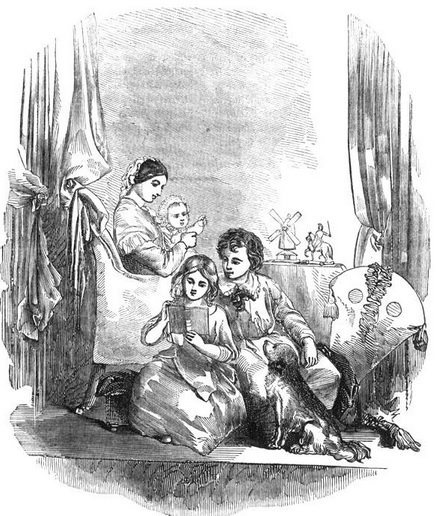
Recently in History class we have been learning about the social reforms of the 19th century. One that was most prominent is the Women’s reform, the goal for this lesson was to determine how the mid-19th century society reacted to women’s demands for equality, and to decide whether or not people nowadays still treat women differently than men. In 19th century society women were expected to stay home with the children during the day while the men were out working. This illustration demonstrates that some of their responsibilities included educating the children, entertaining the children and keeping the home in a orderly and peaceful state.
There were many restrictions on women in the mid 19th century; Laws and Practices contains the laws that were affecting many women during this time. Clearly there were some outrageously different ideals back then. The Seneca falls convention was held in upstate New York to address these issues, this was the first time that the demand for women to vote was formally introduced. Out of the convention came the Declaration of Sentiments and Resolutions; these resolutions appear to be reactions to the issues addressed in Laws and Practices. For example, in the Declaration of Sentiments and Resolutions it states “That the speedy success of our cause depends on the zealous and untiring efforts of both men and women, for the overthrow of the monopoly of the pulpit, and for the securing to women an equal participation with men in the various trades, professions, and commerce.” This is addressing a statement in laws and Practices that says some women teach, but they will only be paid 30%-50% of what men would for the same exact job.

There were obviously reactions to these demands that women were imposing, in the newspaper there were a variety of opinions on what these women were trying to do. For example on August 3, 1848, The Recorder published an article that called the women’s reform flat out silly; “We need not say that we think the movement excessively silly…”. There certainly were positive reactions to the convention as well, The North Star published a piece that asked why women can’t be entitled to rights when negroes and males are. “Many who have at last made the discovery that negroes have some rights as well as other members of the human family, have yet to be convinced that woman is entitled to any.”

Answering the question of whether or not women are still treated differently today, this video shows the different labels men and women are given when they behave in the same manner. Women are treated differently sometimes not on purpose but it can be demeaning and offensive to some. Most of the time actions are not what show this but what is expected from women, and the attitudes toward them.

Thursday, January 15, 2015

Temperance or Not; The Decision in the Hands of the People

Daily Evening Journal, Friday, Dec. 8, 1854
Crime in the City. [editorial]
In speaking upon this subject, it is useless to recount the enormities committed against the moral feelings of the whole city, during the first year of the present mayor's administration, when murders were perpetuated with impunity, and known violators of law permitted to go unpunished and unrebuked, provided their sinning was on the side of rum and intemperance. From the moment that he refused to appoint a Marshal, for whom more than a thousand citizens petitioned, vice and immorality held a jubilee, for they saw that the executive power of this city was their friend and ally, and rum shops sprung up at every corner of the street, drunkards staggered in every alley, while prostitution reared its brothels at every thoroughfare leading to us, and held carnival in the very heart of the city itself. Virtue was confronted on the streets by known harlots, young men decoyed to houses of infamy in open day, and beneath the very shadow of the Mayor's office, the courtesan bargained for the price of her embraces, and led her victims to a place of assignation.
Public opinion cried out against these outrages of decency, but the executive power of the city was as dead to petitions, to remonstrances, and to cries of help for redress, as it was destitute of those high principles of morality that alone can adorn an official position. No descents, as are done in other cities, was made upon known houses of ill-fame, and the quiet of four suburban villages was destroyed by their hellish orgies, while thieves made their dens the receptacles of their stolen plunder, and vice, hideous, loathsome and revolting, revelled in and disgraced our city. The people, at last, publicly rose against the Mayor, pulpits exposed his heedlessness and disregard of the honor of the city, and he retorted by accusing them of falsehood in their statements in regard to the amount of crime among us. A change was made in the city marshal, Irishmen made constables and appointed watchmen, and halycon days were once more to shine upon the city; but the Scriptures were still true, and the "last (year) of that man was worse than the first."
What think you, reader, is the amount of crime this year, compared with last? CRIME has nearly DOUBLED, and where last year, we had but 583 cases before the Police Court, we have, in the eleven months of this year,nine hundred and seventy-one . . . .
Where is the remedy? It lays at the ballot box. For two years the people of this city have voted for rum, elected rum mayors, and been the tools of the rum coalition party in this city, and at their door lies a load of guilt which they must remove…. Public opinion, as expressed by the suffrages of the people is the great agent that controls a community, and when it declares for rum mayors, crime stalks openly in our streets, and its agents murder in our public squares. But let the people declare for morality, chose an executor that is the friend of private morality, and public virtue, and all those human monsters, that have for two years disgraced our city, will slink back into their infamous hiding places, and Worcester will become as noted for its virtue and morality, as it now is for its vices and iniquities. God speed the day, we seem to hear, from two thousand American voices.”

Citation: Unknown. Crime in the City, Daily Evening Journal. December 8, 1854. The Temperance Archive. http://www1.assumption.edu/users/mcclymer/95Fall97/EveningJournalDec8.html . Accessed January 15, 2015.


The author of this newspaper article believes that temperance, can solve all of the crime and violent issues happening in the city of Worcester, Massachusetts at the time. He or she believes that the people are voting for the officials that are not right for the city, the author is trying to persuade them to vote for a mayor that encourages temperance. The author sees alcoholism to be the base of all of the crime and unrighteous happenings in the city. The article has facts to support its claims, but the piece is obviously one sided. It highlights the negative impacts to which having a alcoholistic society has brought upon; when there is more downsides than upsides to this, they still are not mentioned. At the time there were more liquor stores and bars that lined the streets than any other type of service, people would not only be drinking during the night, but during the day as well. Alcohol was tearing apart families, and costing people their jobs. Temperance could not have been a bad thing for society. The people doing the drinking were mostly men, but women were experiencing the consequences; domestic violence was one of the results of the amazingly large alcohol consumption. The author most definitely is attempting to convince the people to use their vote wisely, to vote for an official that would support temperance and decrease the available amount of liquor at the time.

Thursday, December 11, 2014

Andrew Jackson; What Kind of Person was he?

For a few days in history class last week, we learned about the president Andrew Jackson. Jackson was the first president to be elected through a democratic process, and he served his presidency in the years of 1829-1837. He put into act a couple of policies that were not necessarily fair, Indian Removal, Bank War, and Spoils System. In class we got into small groups and each group was assigned one of these three topics. Then we were to analyze the information we were given and to create a project that portrayed our opinion of whether or not Jackson deserved the title “The People’s President”. My group was given the subject of Indian removal. This enactment was an initiative Jackson created to move native american indians west, so that there would be more room for white settlers. He told them that this was their only option if they did not want to abide by the countries laws while they were living in its territory. The indians did not want to leave their home and were quite hesitant of the resources that would be available to the west, but following the countries laws seemed more unfortunate so they went. The long journey they had to endure and the many struggles they happened upon was called the Trail of Tears. All this information and more found here suggests that Andrew Jackson did not deserve his title and was not always looking out for people’s best interests; more like his own.

When watching the other groups presentations they seemed to have the same conclusion. First, Andrew Jackson’s Spoils System was a practice where the elected office would give jobs to its supporters, so when Jackson was voted into office he had to make room for all of his supporters, and he fired 919 government officials to keep his word. When this happened he told people that it was a way of reform, but in reality everyone knew that this occurrence was unjust. Later on Jackson hired a criminal because he was a supporter, but this backfired on him; his system of giving jobs to supporters costed him 1.2 million dollars when Samuel Swartwout robbed him. The Bank war was an effort where Jackson tried to eliminate the second bank of the U.S. This is because he thought it was unfair that unelected officials were running this institution and potentially controlling people’s lives. Jackson thought he was looking out for the middle and lower class, when doing this because if this bank remained they would have less and less say in their economy. This was Jackson protecting the lower classes, but what about the higher classes? There were most definitely people there too, so this created the image that Jackson was abandoning the upper class, which now could go either way as to whether or not he deserved his title based on the Bank War.

Wednesday, December 3, 2014

A Reflection of Democracy

Most recently in History class we have been learning about democracy in the 1800s and how it came to be in the United States. Our goal for this lesson was to figure out the meaning of Democracy, and how active the system was in the U. S. during the 1800s. To achieve this goal we analyzed 7 pieces of information  and each group also came up with a definition of Democracy. My group’s definition of Democracy is a system of government where people are directly given the right to vote on issues and their government, this was not a fully accepted idea until the mid 1800s. While analyzing the 7 pieces of information we took notes on how the data reflected democracy in that time period. We then created either a web or a prezi with the essential question in the center and branches going out to our explanations for each document.
Displaying FullSizeRender.jpg
This is my groups poster.