Monday, October 27, 2014

Liberalism, Nationalism, and Conservatism, Oh My!

During the 19th century there were multiple ideas that influenced the way people thought and  acted. These ideas are called ideologies. The three that we focused on most recently in History were Liberalism, Conservatism and Nationalism. Our job was to find out what the three ideologies were all about and what they did to influence the political and social systems of the time. We kicked off the lesson by trying to come up with our own definitions, which was quite difficult to create the modern meanings never mind the 19th century ones; then when the time allotted for that was up we were given more accurate definitions. To really understand what each of the ideologies meant we then split into groups and came up with a one-minute presentation to explain our ideology to the rest of the class.

My group covered Liberalism. This is the idea that the government’s job is to make sure that the liberty of the people is reserved. Liberals were open to new ideas as long as they can be supported by reason. The criteria for this presentation was that it could not be any longer than one minute, and at least somewhere around 57 seconds. We could use any program that we wanted, chatterpix, educreations, we could make a video and there were many more options too. My group chose to use chatterpix; this is an app that allows you to find a still picture and add voice to make it look like the picture is talking.

These were the different faces of our presentation, cartoon man, John Locke, and Adam Smith.


To try to teach the class about each part of Liberalism we had one figure talking about the definition of 19th century liberalism. In this we informed the class that Liberalism is the idea that the governments job is to reserve the rights and liberties of the people. Also that John Locke and Adam smith were large pioneers for this idea; building off of that we had Adam Smith and John Locke talk to the class about how their ideas were liberal. John Locke explained that he made the argument that regardless of class, people are born with the same natural rights as others. Adam Smith also played a roll in our presentation, he explained his theory of “The Invisible Hand” which is if the government sits back then the economy will regulate itself and people will compete among themselves. These ideas along with liberalism impacted many people and things during this time; some of these being the social and political systems. John Locke’s liberal idea made all people aspire to have equal rights, which caused middle class to want to take part in their government. Adam Smith’s liberal philosophy of the invisible hand impacted the social system greatly at this time; people would compete to be better than others, to see who would have the most money. The government has to be present to be sure that no one is being mistreated but they also stay behind and let things play out instead of interfering. Liberalism changed many things in the 19th century, and impacted many people. The idea that the government should protect the peoples rights was a very important one, and many benefiting things came from it.

In class the other groups taught us about the other two ideologies of the time: Conservatism and Nationalism. I also learned about them from this article. Conservatism is the is that old ways and traditions are kept. This is because when you need guidance; you may go to someone experienced for guidance. This makes sense because then you will know what has worked in the past and what hasn't. Looking to the past for successful ways of life and keeping those ideas and traditions is the idea of conservatism. This impacted social and political systems of the time because aristocrats that ruled in the past, kept their place in society and in the government. Nationalism is another ideology of the 29th century. This is the unification of similar languages, cultures, races, and histories. Nationalists also do not want foreign rulers. This impacts the social and political systems because people who weren't the same race as the majority would have been the lower class. Those that were all for their country and strong willed would make up the government. Overall the three ideologies of the time, Liberalism, Conservatism, and Nationalism all impacted the political and social systems, as well as many peoples lives.

Wednesday, October 15, 2014

A Napoleonic Age

Napoleon Bonaparte was considered to be one of the most strategic and successful military leaders and emperors to ever live. He was constantly expanding his empire all over Europe. Bonaparte had a large impact on the social economic and political systems of Europe; some bad some good. He could benefit you or completely turn your lifestyle in the opposite direction. Napoleon was a person that most were impressed by, not only for his military skills but for his amazing skill with motivational speaking. He spoke to millions of Frenchmen and at the drop of a hat convinced nearly all of them to join him in battle. Napoleon was a powerful man that made many changes to many peoples lifestyles, some having good results for everyone, but most benefiting one side of the issue. To find out more about Napoleon and his ways watch this video.
Napoleon Bonaparte, one of the Greatest Military leaders to ever live.
http://www.domainedechantilly.com/sites/default/files/Napol%C3%A9on%20Bonaparte%20Consul-fran%C3%A7ois%20G%C3%A9rard%C2%A9RMN_0.jpg 
The many parts to Napoleon’s take over included redesigning the political, social, and economical systems of many countries. In regards of France Napoleon impacted the political system very positively. He conquered many places, expanding Frances territory and therefore making France a larger and much more dominant country than anywhere else. Bonaparte also altered the Social order in many places. Napoleon created a meritocracy in which people would be rewarded based on their skills not their social class. In “Two Views of Napoleon” Madame de Stael sees Napoleon as forceful and intruding on the perfect order of France. This may be because she was the daughter of one of King Louis XVI’s financial advisers, giving her the most lavish lifestyle possible, so when Napoleon changes the way people would be rewarded it completely changed her way of life. In other words Madame de Stael was part of the nobility; when the social system was altered she was knocked down a few pegs, not robbed of every cent she had. In the same article “Two Views of Napoleon” one of Napoleons devoted war generals; Marshal Michel Ney praises Napoleon Bonaparte, calling him an “august emperor” and and “immortal legion”. He sees Napoleon as the future of Europe and the only person who could give the people liberty. The general also is slightly biased; being close to Napoleon he is most likely rewarded for following him and sees him in a slightly better light than most others. Still Napoleon did give people what they wanted, he changed their lives for the better. Bonaparte controlled prices, encouraged new industry and built more roads and canals. This created more jobs and options for people.
Marshal Michel Ney, one of the loyal companions that helped Napoleon get where he was.
http://upload.wikimedia.org/wikipedia/commons/e/e9/Marechal_Ney.jpg
In “The Lost Voices of Napoleonic Historians” it says “... while we recognize these defects and faults, let us be equally frank in acknowledging his great qualities, -- his untiring industry, his devotion to the public service, his enlightened views of government and legislation, his humanity." Napoleon did have faults; he overcame the continent of Europe with the terrible conditions of war, he stole precious pieces of culture to make himself more wealthy, but he always had the best interest of the people on his mind. In some parts of the article it talks about how Napoleon would have been seen as a perfect ruler if he had not took that one last step into the territory of an overpowering tyrant.

My opinion on Napoleon Bonaparte is that there were many things that he did some bad, but most benefiting the majority of the population. He may have done things that were not necessary to achieve his goal, but overall he changed the way people lived in a positive way. Bonaparte changed how social class determined everything about you; you could come from a not so well off family, and still manage to make a name for yourself if you worked hard enough. I think that when some people, particularly nobles were put off by his remodel, he still impacted their lives in a positive way as well.

Thursday, October 9, 2014

Which Way is Best? The World May Never Know

Recently in class we did an activity to represent the different kinds of government that influenced the industrial revolution. We played Rock Paper Scissors; we each started with 3 Hershey kisses, this represents the amount of money each of us had. The only exception was a few of us, those few started with 10. Then we played the game; we got to choose who we played with and if we lost you give your opponent one of your Hershey kisses. This keeps going and if you run out of Hershey kisses then you sit down and you are out, this was the result of most people’s games. The few exceptions though, got to keep playing. Even if you have only one Hershey kiss left and you don't want to risk getting out; you still have to play. This game created some frustration because the majority of us had only 3 to start with and we had a disadvantage to the few people that had 10. After a while we stopped and the teacher collected all of our chocolate, then redistributed it evenly so that each one of us had the exact same amount. Next we were given the option to play or not, when in the first round we had to play. This resulted in most people not playing because wisely, they did not want to risk losing their candy. This activity was fun in the sense that we were playing a silly game and only gambling candy, but for the people whose government this was representing they were gambling their health and their comfort. Needless to say our version of this was much less stressful but very depictive of the struggle none the less.
Both Karl Marx and Adam Smith wanted to help the poor, but they had drastically different approaches. Marxism is the process of Capitalism, then Socialism, then Communism. This means that at first in the step of Capitalism the economic classes were unequal. Some people had wealth beyond belief, but most had next to nothing; people were completely on their own. Next in Socialism what happened was that the government took control and then redistributed the resources evenly. Once everyone has equal ownership, classless society has been reached, and now communism begins. In communism people will not gamble their wealth in order to become more wealthy, they would rather stay at the same level as others rather than risk being less. This means there is no government needed, people will make agreements with others and will take care of themselves. The poor benefit from this system because they will then have the same amount of resources as everyone else. The The Invisible Hand is the form of government that Adam Smith created in order to help reduce poverty. This system is the idea that free trade, free migration and limited government will turn the economy around. This system is when the government sits back and doesn't do much when it comes down to controlling the people. It plays out to be people competing against each other for business, even if it means lower setting a lower price. This gives the buyer more options when it comes down to what they can afford. Benefitting the poor amazingly The Invisible Hand is also a form of government that helps out our economy.
Marxism and Smith’s Invisible Hand Theory are very different. In Marxism, the government has to take control of the people in order for them to eventually be equal and for the government to be nonexistent. In The Invisible Hand the government does nothing at all and lets people who sell things compete against each other for lower prices. I think that the Invisible Hand is a better system of government than Marxism. This is because in Marxism, the government has to take away some people’s wealth, that is something that they may have worked very hard for. Otherwise in The Invisible Hand people don’t necessarily have to have the same amount of everything, but they still end up having a better life than they would have without a system like this.

Sunday, October 5, 2014

A Mill Girl Revolution

During the Industrial Revolution many mills were built to contribute to the revolution. Obviously with these factories people were needed to work in them, at this time boys were a good workforce but at the same time they were needed to help out on the farm; they were too valuable to give up. Girls on the other hand could also be put to work but weren't as helpful when it came to the family farm. This is the reason for why girls primarily were the ones put to work in the mills. Women who had the option to go to Lowell, most likely would make the decision to go. In Daughters of Free Men, Lucy Hall a somewhat younger mill girl, it was slightly because she desired freedom from her father, and some money to spend on herself. For most girls this was the reasoning, in most cases the daughters would send a part of their pay back home to be sure they were still somewhat helping out.
This is the cover of a book that contains stories from the mill girls themselves.
While these women were working in Lowell, they had many advantages. During time off from working, they had the chance to read, as this picture shows. This tells us the girls had the opportunity to get an education; for most this was better than anything they could have gotten at home. There would have been no opportunity for them there, in the case of Lucy Hall, when she went to work in Lowell she had the chance to attend a lecture from an author. These girls were not slighted at all when it came to opportunity. Other pros to working in Lowell were that the environment was shown to be peaceful and relaxing; good for any kind of reflecting or relaxation that I’m sure needed to be done.

When working in Lowell brought many advantages to these girls it also caused some grief for them as well. Overseers in the mills could sometimes be tyrannical and very demanding. They would be little these girls and cause them to think that being quiet and not standing up for yourself was the only way you could get anywhere in life. Other downfalls to working in Lowell were the obvious constant fear of wage cuts, frequently the girls pay was reduced because of the hard times everyone was facing. When this affects everyone it was more unfair towards the women who had given up their lives to work, if things did not work out and the pay could not support them then they would have nothing. If you worked in the mills then your were also in constant peril. Machines were very dangerous and the tiniest of things would cost you your health. In many cases girls with long hair were scalped, their hair was completely ripped off. other health issues were presented as well; machines were so loud it cost most people their hearing. Also the food the girls were provided was not even close to nutritious, it wasn’t giving these girls the proper nutrients their bodies would require to work as much as they did.

These opportunities and restrictions on the mill girls reflects the attitude toward women in the 1800s. Before the mill girls there was little to no education for women, this created more rights for women in general. The act of girls going to work in Lowell changed the way people viewed women working outside of their home and living away from their parents in a good way. Since the girls were watched over when they were working they never got out of line. These well behaved mill girls created a good image for the Lowell mills and the girls. The way people viewed women in general was also changed through this process, many of these girls who grew up working in the mills went on to become women’s right activists; really making a difference for themselves and others.

Sunday, September 28, 2014

Give Your Health, and You Can Take Away a Living

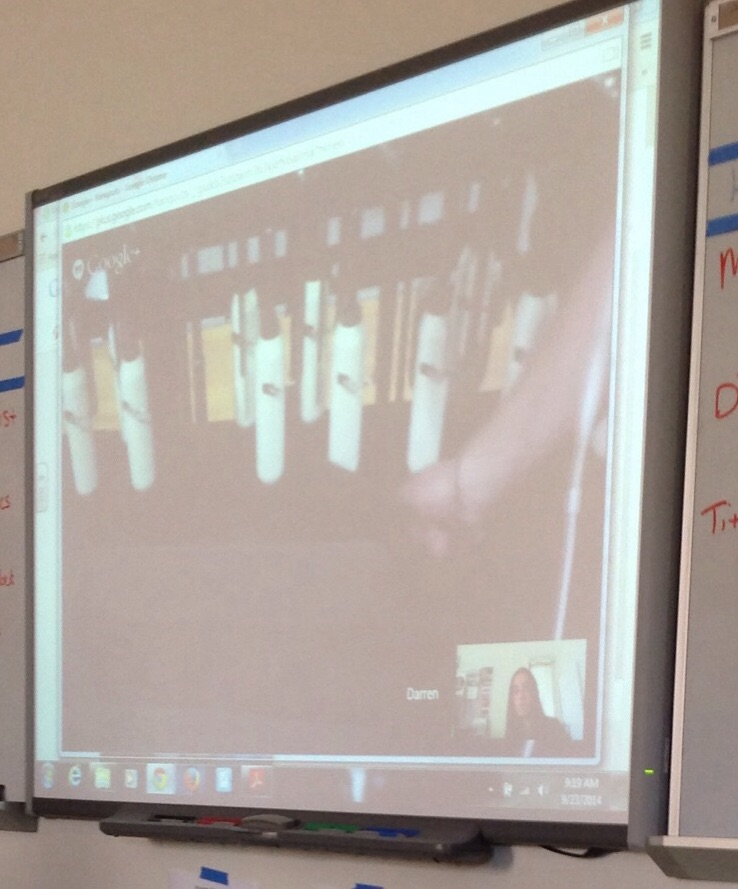
Recently in History class we did a live chat with a person in Manchester England, who showed us around the Museum of Science & Industry. With this we could get a better understanding of how people lived during the industrial revolution. To prepare for this we had to do some research; we found out about Sir Richard Arkwright; the man who developed a spinning frame, and the improvements that were made upon this invention. Before we did the live chat with Jamie, our explainer, we also watched a video introduction, while doing this we took down all the vocab terms on the machines. Afterwards, as groups, we found the definitions of these words and this way we would be able to understand what Jamie was talking about if he used these vocab terms in the live chat. Next we drafted some questions that we might get a chance to ask Jamie, things like; How long would the whole process take overall to create a huge reem of cloth? and What motivated Jamie to become a museum curator?
There are many dangerous and interesting parts to the textile process. Kids and families played a big part in it too. If you were a parent who worked in a factory, you were expected to bring in your kids to work to do all the things that you were too large to do. The catch with this is that the jobs kids were doing were much more dangerous, because they were smaller it was easier for them to get in between the machines and clean them. Which then presents a bigger chance of getting caught in the machines. Most parents did not want their kids working with these dangerous machines so believe it or not they would buy orphans to fill in for their child in the workplace.
This is one of the machines that children would have cleaned. They would stick their hands in between the spinning bobbins to clean out the dust.

Not only was working in the mills a danger to children but everyone else as well. From just being in the mill you could lose your hearing, the machines were so loud people went deaf. For ladies working in the mills if you had long hair, you were sure to pull it back, because if you did not there was a risk of being completely scalped. Your hair could get caught in a machine and once that happened there isn’t much you can do. Cotton Fibers filled the air of the the mills, so naturally breathing this in for a long period of time could cause a lot of damage to someone’s lungs, it may even have costed people their lives. Also on a machine like a Hand Loom, you were doing a lot of physical labor, this means using your muscles for the entire day. All of this work would cause people to get stronger, but at the same time develop conditions like Arthritis. Families working in mills during the industrial revolution may have kept them afloat, but it was costing them a lot more than they probably would have hoped.
Doing this Live Google Hangout benefited me very much to understand the risks and health problems working in the mills caused. Having someone explain all of the machinery processes also gave me a better understanding of the types of work people could be doing. I also think that the way we prepared for this was very helpful towards the discussion we had with Jamie. It gave us somewhat of an understanding of what he would be talking about without us knowing more about the machines than the conditions we are studying. Hearing all of this from an expert most definitely impacted the way I look at curating as well, Jamie gets to be an expert on something as interesting as all of these machines and at the same time teach people about them. I think the curating process is very interesting and I am very glad that we got a taste of this in class.

Sunday, September 21, 2014

The Big Picture

"Making Money Destroying Neighborhoods"
Recently in History class we, as groups, became experts on a certain topic of the Industrial Revolution and created our own museum exhibit to teach everyone about our subject. There are many pieces to putting together your own exhibit. First we all had to become experts on the topic we would be presenting, for us this consisted of analyzing documents to find information, but also analyzing the documents to find out about the author, and the time period. This then helped us to lead into what people would want to get out of our exhibit, so we then created captions for our documents to summarize the documents information. My group’s topic was the negative effects on the people and environment during the industrial revolution. This picture does not give a clear picture of my groups exhibit but I will explain the sources here. The first picture in the top left corner is called “View of Manchester” this picture gives us a visual of the polluted river, the document in our exhibit that goes hand in hand with this picture is “Observations on the Filth of the Thames” this letter was written by Professor Michael Faraday to the editor of the times of London. Professor Faraday told the times about the smell and discoloration of the liquid that was supposedly a river. The two documents outlined in purple both show how in certain years of the revolution the amount that most people were earning was not enough to keep up proper living conditions, in other words “Dudley Street” and “Evidence on the Standard of Living Debate in Great Britain” showed us how common poverty was. The last two documents in our exhibit “Differing Views of English Industrialization in the 1830s” and “Industry 1715-1815” show the two sides of the industrial revolution; they demonstrate the revolutionary inventions and amazing technological advances, but also show us the effect it is taking on the people and environment. Our title “Making Money, Destroying Neighborhoods” was created to really give the visitor an idea of what the exhibit is about, how the industrial revolution was hurting many people in order for success.

Besides my groups exhibit, I learned a lot about the other parts of the Industrial Revolution. “America Runs on the Steam Engine” was a very creative title that caught my eye. This title contributed to my understanding of the exhibit because it very clearly demonstrates that without the steam engine industrialization would have been much more difficult, with it trading with other places was made much more convenient. This exhibit shows the importance of metals and coals and without these, so many of our technological advances would have been impossible. The exhibit that was all about the different looms, I also found to be very interesting. The title “Just Keep Spinning” I thought was very clever and fitting to the exhibit. When reading this groups poster I learned that even when all these new technology pieces were being made and they were making life easier, some people saw them differently, for example one man was upset because these machines were doing human work, and then his wife and kids were being put out of work. Not to be forgotten though, the advances to the loom were very revolutionary. The loom went from being inefficient to becoming a very fast machine that could get work done. The exhibit on Slaves and mill owners I thought was very interesting, the title “Prosperity at the Cost of People” aids in my understanding because it shows how many people were being put to work just so one overarching power can make more money for himself. while reading this exhibit I learned that slaves were in very high command during the time period of the Industrial Revolution, they would pick cotton and because cotton was in such high demand that’s why slaves were. The last exhibit in my class is called “Is the Pain Worth the Gain” this title is asking us if putting your small children to work in terrible conditions really worth just getting the work done? In this exhibit I learned how terrible the working conditions were for the small children, they were as young as 10 when they were put to work.  

Thursday, September 11, 2014

All Wrapped Up Into One Revoltuion

The Industrial Revolution was very important in the making of new machines and substances that made life easier and more enjoyable. In class we watched a video by John Green describing a few of the things that were invented during this time. The video also showed us that without the industrial revolution we would have so much less than what we do now. The real question here though is, What makes this so Revolutionary? There are many things that play into it, them being Technology, People, Resources, and Transportation. Today I will only be talking about Technology and Transportation.
[Picture: Spinning Jenny]
"Spinning Jenny"
http://www.fromoldbooks.org/Antisell-HandbookOfTheUsefulArts/pages/109-Spinning-Jenny/ 
First, Technology played a very big part in the Industrial revolution. There were many discoveries that made a huge impact on peoples lives and the world in general. There was the Steam Engine invented in 1712 by Thomas Newcomen. This was very important, it pumped water out of mines which improved coal production, which led to more iron to make more machines etc. Then in 1769 James Watt improved on Newcomen's design of the steam engine. Iron was also improved during the Industrial revolution. Abraham Darby used coal to smelt iron. Darby conducted more experiments and this led him to find a way to remove the impurities from iron. Now the iron was better quality, and was used more widely around the world in the production of steam engines and other pieces of technology. Also the flying shuttle, spinning jenny, and water frame were used to speed up the production times of weaving and spinning. Technology was depended on so heavily that this by itself could have made the Industrial revolution revolutionary. Now, amount of time spent on production was decreased giving us more products and more free time.

Steam Boat
http://steamboats.com/museum/davet-photos5.html 
During the industrial revolution transportation also played a large roll. Steam boats were invented which allowed faster overseas shipment and a lot of new trade. Later on instead of using steam boats to transport goods people used them more often, because they required so much coal to transport all the products. Next the steam locomotive was invented for land travel. This helped people transfer things much more efficiently. Turnpikes were also built to transport goods but a small fee would have to be paid in order to use this. More railroads were also built to let people transport more widely. With all of these new innovations people had more access to newer and farther away things. These new inventions were so revolutionary because they helped people see new things that would further their education and improve their lifestyles.